

What is the minimum range of the Mercedes CLA 350 4MATIC?
From Brussels to the first charging stop
We’re starting in Brussels with a 1,060-km drive to Montpellier. I’m using the Mercedes navigation system, which is based on Google Maps, and letting it automatically plan the charging stops without any preparation. After 141 km on the Brussels ring road and the E411, I do my first check. The battery is at 73% at 15 °C, and energy consumption is 17.1 kWh/100 km. If we calculate the 17.1 kWh consumption based on a usable battery capacity of 85 kWh, that gives me an estimated range of 497 km. That does surprise me a bit. Since the system constantly recalculates the charging stops, I’m not going to pay too much attention to this.
The route was varied, with stretches at 110 and 130 km/h, but also a lot of traffic. Meanwhile, the charging stop has been changed again to Ionity Langres-Pérogney. I’ve now driven 470 km, and the battery has dropped from 99% to 20%. With the temperature at 23.5 °C, energy consumption stands at 14.9 kWh/100 km. That translates to an excellent estimated range of 570 km on the highway.
Time for the first charging stop, which, unfortunately, immediately confirms the familiar cliché of the charging line. Fortunately, a charging station attendant keeps everything running smoothly by having everyone park in order of arrival. After waiting 18 minutes, I start the charging session with my DATS 24 charging card.
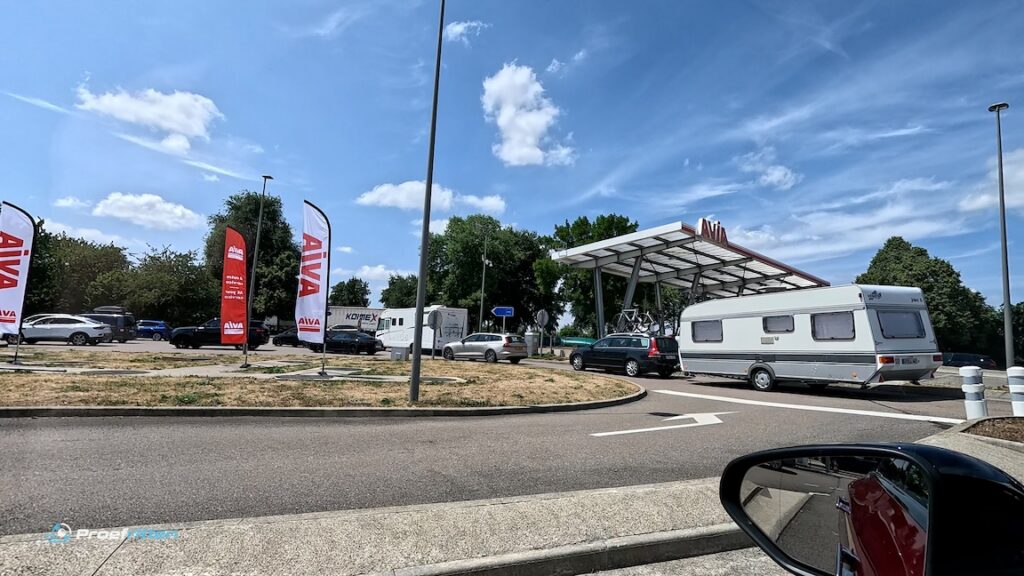
The charging speed is also disappointing: in the first 10 minutes, I reach a maximum of 152 kW, and after 20 minutes, I’m still charging at 125 kW. Since it’s so busy (there are long lines at the gas pumps, too), I decide to charge the battery as much as possible. After 33 minutes, the battery is at 95%, and I’m ready to continue.
Via Lyon to Montélimar: 625 km range and lightning-fast charging
We continue on the route via the A31 and A6. For the next 215 km, we cruise at 130 km/h in 31 °C heat. The battery drops to 59%, but the average energy consumption remains exceptionally low at 14.4 kWh/100 km (at an average speed of 119 km/h). That results in an estimated highway range of 590 km.
Just before Lyon, the GPS directs us along a regional road through the city toward the A7. Around Vienne, the speed drops to 100 km/h, after which it alternates between 110 and 130 km/h with some traffic congestion. At a quarter past seven, I stop at the Ionity fast charger in Montélimar to eat.
Since our last charging stop, we’ve driven 414 km, and the battery level dropped from 95% to 30%. Energy consumption fell to just 13.6 kWh/100 km, resulting in an impressive highway range of no less than 625 km.
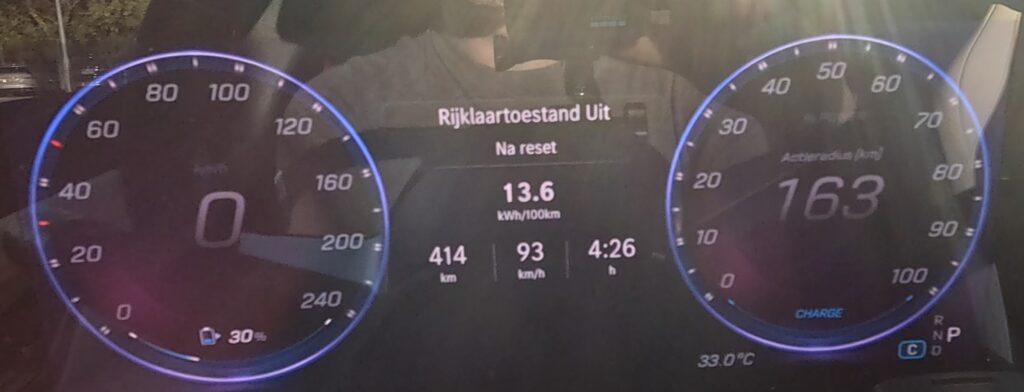
I start the charging session with my DATS 24 charging card and almost immediately reach 327 kW. After two minutes, this drops to 261 kW, but I’ve already gained 61 km of range. After four minutes, the battery goes from 30% to 50% (+137 km) at a charging rate of 204 kW. While I eat, the car continues charging quietly. After 30 minutes, the battery is at 97% and I’m charging at 29 kW. Once I’ve finished my meal, I stop the session after 37 minutes with the battery nearly full (99%).
Next comes the final leg of Day One: a smooth 157 km drive at 130 km/h to the hotel in Montpellier. The battery level drops from 99% to 73% with an average consumption of 14.6 kWh/100 km (estimated range: 582 km).
Day 2: To Southern Spain (800 km)
After a well-deserved night’s sleep, we continue our journey along the Autoroute du Soleil to Moraira. In the navigation system, you can adjust the settings. For example, you can choose to automatically schedule charging stops. You can also set how much battery charge you want to have remaining when you arrive at a charging station and select the desired charge level upon arrival at your destination. The route planner suggests two charging stops, including charging times and battery percentages. The first stop is scheduled near Perpignan with 47% battery remaining. While driving at 130 km/h, the GPS suddenly moves the charging stop to Spain (at 30% battery). Just before the border, I decide to stick with the original stop at Electra in Perpignan after all. That way, I’ll enter Spain with a full battery and can take my time assessing the charging situation there.
Between yesterday’s last charging stop and today, the battery level dropped from 99% to 50%. Over those 291 km, average energy consumption was 14.8 kWh/100 km, resulting in an estimated range of 574 km. At Electra, I choose an available 200 kW fast charger. I immediately get 202 kW. After 10 minutes, the battery is at 77% (charging rate: 121 kW), and after 20 minutes, it’s at 93% (62 kW). When the power drops to 28 kW, I stop the session after 27 minutes with the battery at 98%.
Through Spain to Tarragona: 603 km range
The next stop is scheduled after 288 km, when the battery is at 48%. We cross the Spanish border via the AP-7, navigating elevation changes, traffic jams, and slow-moving traffic around Barcelona. The GPS directs me to Ionity Tarragona, a few minutes off the highway behind a truck stop. Over the past 297 km, the battery level dropped from 98% to 50%. Despite temperatures reaching 37 °C, energy consumption averaged 14.1 kWh/100 km (603 km range). The car remains impressively fuel-efficient. I charge longer than the recommended 75%. The session starts at 196 kW. After 10 minutes, I’m at 78% (120 kW), and after 18 minutes, I’m back on the road with a 90% charge.
Final Stage: Arrival in Benitachell
Now comes the final stretch of 383 km to the final destination, with an expected remaining battery charge of 25%. The speed limit on the highway is 120 km/h. Traffic sometimes slows down due to a truck passing on the two-lane sections. The navigation system directs me right through Valencia instead of around it, presumably due to traffic jams on the ring road, which costs me just under an hour. I finally arrive in Benitachell, a coastal village between Jávea and Moraira. Since the last charging stop, I’ve driven 374 km, and the battery level dropped from 90% to 27%. The average energy consumption was 14.8 kWh/100 km. This gives an estimated range of 574 km. Looking at my entire route, my range on the highway fluctuated between 570 km and 625 km. It’s quite impressive to experience that firsthand. Actually, with this car, you don’t have to worry about range at all.
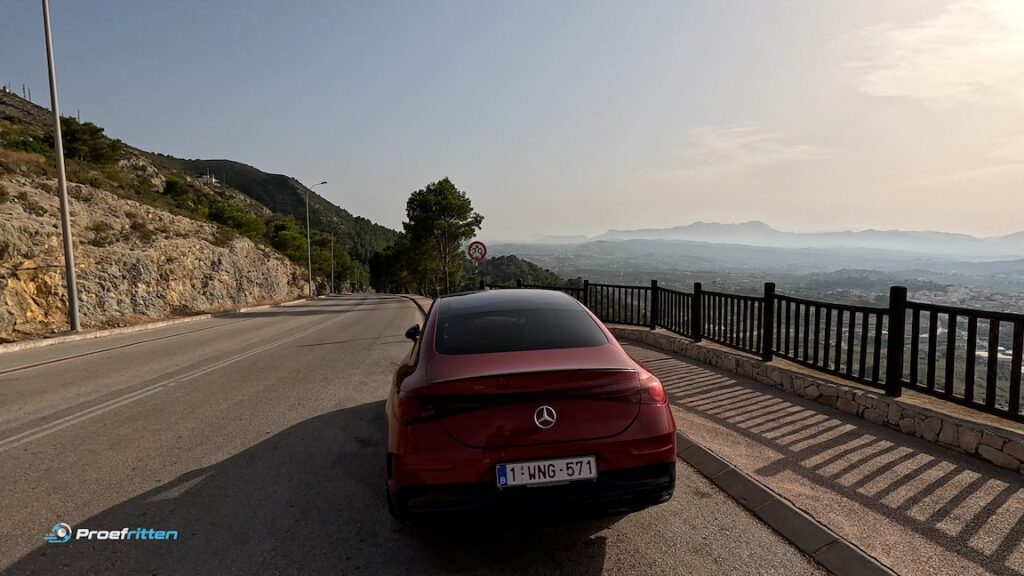
Return trip, Day 1: 1,121 km in 1 day
For the return trip, I want to conduct a range test on regional roads on Day 2. To make that happen, I’ll take a long drive of 1,121 km to Limonest (just north of Lyon) on Day 1. With a 100% battery charge, the GPS suggests three charging stops, starting with an expected stop in Tarragona.
On the AP-7, I’m cruising at 120 km/h on the two-lane roads. Around Barcelona, traffic slows down, and the GPS directs me to a charging station in an underground parking garage off the highway. I skip that one, but nearby I spot another Electra charging station above ground. Over this 478-km stretch, the battery dropped from 100% to 18%. At 33.5 °C, energy consumption was 14.8 kWh/100 km (574 km range).
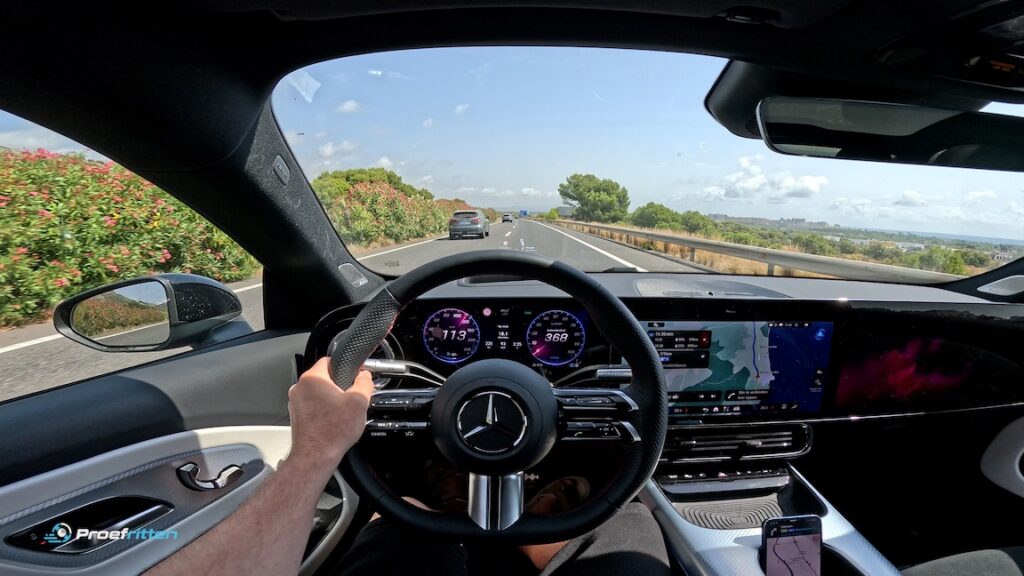
With Electra, the charging power immediately peaks at 302 kW. After 5 minutes, the battery is at 42% (237 kW); after 10 minutes, at 57% (146 kW); and after 20 minutes, at 80% (111 kW). After 24 minutes, I stop at 87% battery charge, while it’s still charging at 88 kW.
The next stop is scheduled after 415 km. There’s a lot of traffic on the highways around Barcelona over the next few kilometers. After 22 km of stop-and-go traffic, energy consumption peaks at 20.7 kWh/100 km (range: 411 km). The rest of the trip through Spain goes smoothly, but in France I get stuck in traffic at the first toll gate. After that, stretches of 130 km/h alternate with traffic jams. After 7:00 p.m., I stop near Montpellier to eat and recharge the battery. Over these 325 km, the battery level dropped from 87% to 31%. Due to the traffic jams, energy consumption rose to 15.1 kWh/100 km, which still yields a respectable highway range of 563 km.
At the fast charger, the charging session starts at 297 kW. After 14 minutes, the battery is at 76% (120 kW), and after 25 minutes, it’s at 92% (60 kW). I finished eating after 32 minutes and then stopped charging. At that point, I was charging at 24 kW. The battery is at 97%.
Today’s final leg is 316 km to my hotel in Limonest. For the most part, the drive goes smoothly. There are still occasional traffic jams, though. The nighttime driving experience in the CLA is also perfectly curated, thanks to the stylish ambient lighting. You can choose from different ambient styles, and within each style, you have a selection of colors. At the end of the journey, the route takes me through Lyon before arriving at the hotel. The battery dropped from 97% to 46%. I drove 315 km and consumed 14.3 kWh/100 km. This gives me an estimated range of 594 km.
What is the maximum range of the Mercedes CLA 350 4MATIC?
Overnight, I fully charged the battery to 100%. Today, I’m driving back from Limonest via regional roads to my final destination, the DATS 24 fast charger in Halle. In the settings, I select “Avoid highways” and “Avoid toll roads.” That should give me the best possible route. The GPS shows 668 km. The range indicator reads 601 km. The WLTP range is 743. It should be possible to reach my destination on a 100% battery charge.
Past Mâcon, I do my first check. Up to that point, I’ve mainly been driving through village centers and, occasionally, on a regional road where you can drive 90 km/h. In those cases, I try to limit myself to 80 km/h to keep my energy consumption somewhat under control. The battery is at 90%. I’ve driven 69 km, and the energy consumption is 11.7 kWh/100 km. That gives an estimated range of 726 km. That’s a positive sign. The range indicator in the car shows 568 km, while I still have 596 km to drive. So there’s still a discrepancy there for now.
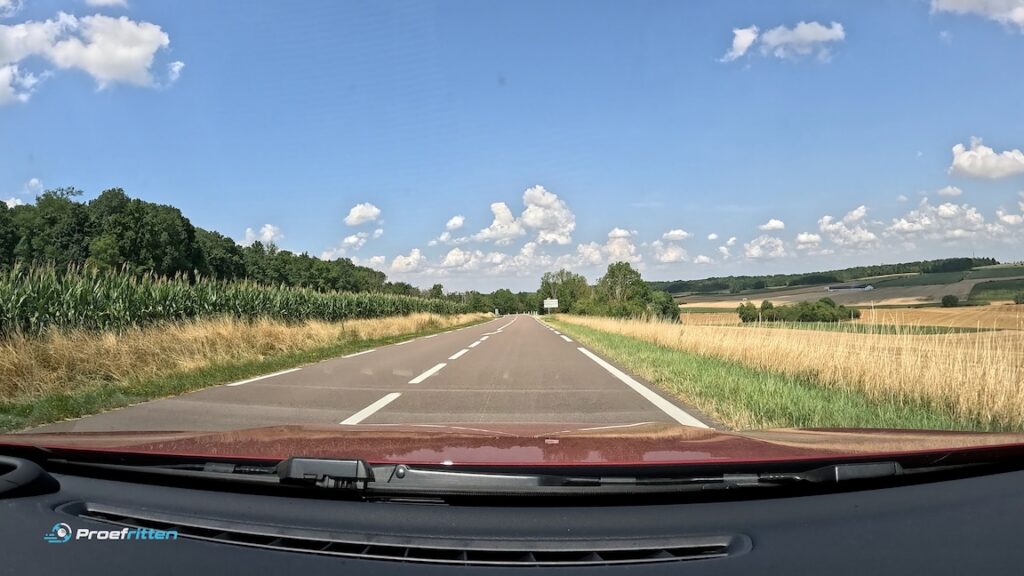
I’m checking my charge again at 65%. Since then, I’ve been able to drive on some really beautiful national roads, with fewer slow-moving village centers limited to 30 km/h. It’s starting to dawn on me that this is going to be a really long day. I’ve been driving for 4.5 hours now, covering 254 km. The energy consumption is at 12.3 kWh/100 km, which translates to an estimated range of 691 km. I don’t have much range to spare just yet.
The next stretch consists of truly beautiful roads with very long straightaways interspersed with very slow-moving village centers where I have to slow down to 30 km/h. The battery has now dropped to 50%. I’ve driven 367 km with a consumption of 11.8 kWh/100 km, which translates to a range of 720 km. I still have 300 km to go to reach my destination. The temperature is now 30.5 degrees.
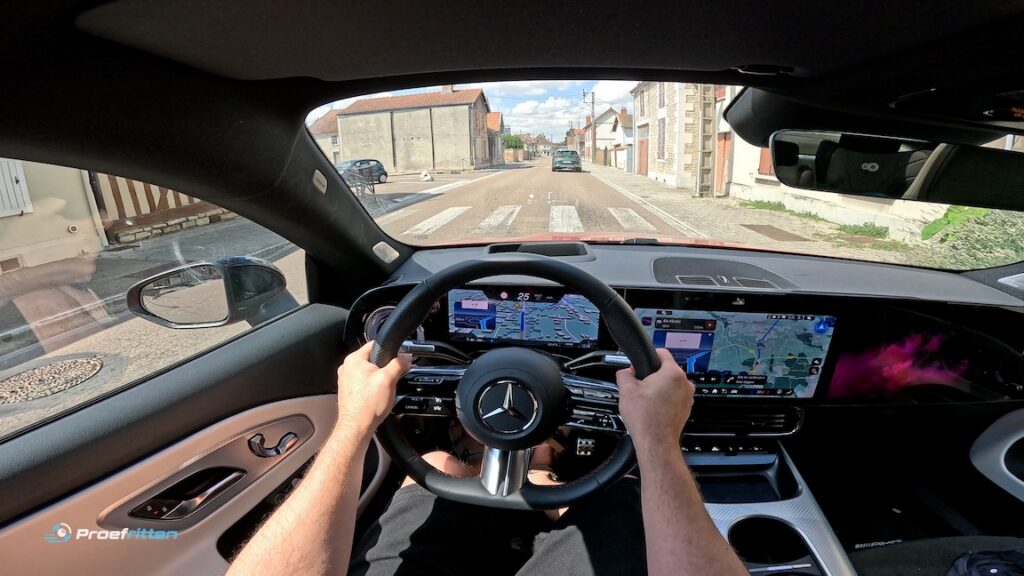
We continue our journey on roads with very long straight stretches, interspersed with village centers. Sometimes a bit more, sometimes a bit less. Most of the routes are roads where the speed limit is 90 km/h, which I’m gradually starting to drive at more and more. We end up with 25% battery remaining. We’ve driven 547 km and have a consumption rate of 12 kWh/100 km. The range is now 708 km. We still have 121 km to go, and the range indicator shows 172 km remaining. So it looks like we’ll make it after all.
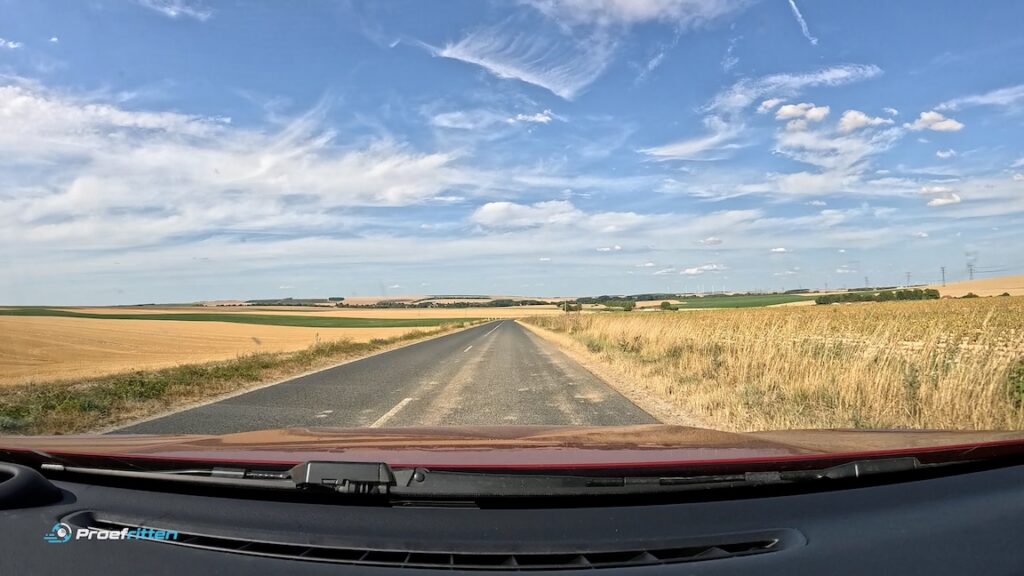
During the final stretch, we cross the border. We drive through village centers and along some smaller roads. Eventually, we arrive at the DATS 24 fast-charging station in Halle. We’ve driven 674 km, and there’s still over 9% battery life remaining. My final energy consumption came out to 11.8 kWh per 100 km, which translates to a total range of 720 km. It’s truly impressive to be able to drive all the way from just past Lyon to almost Brussels on a single charge. In total, my trip took over 12 hours.
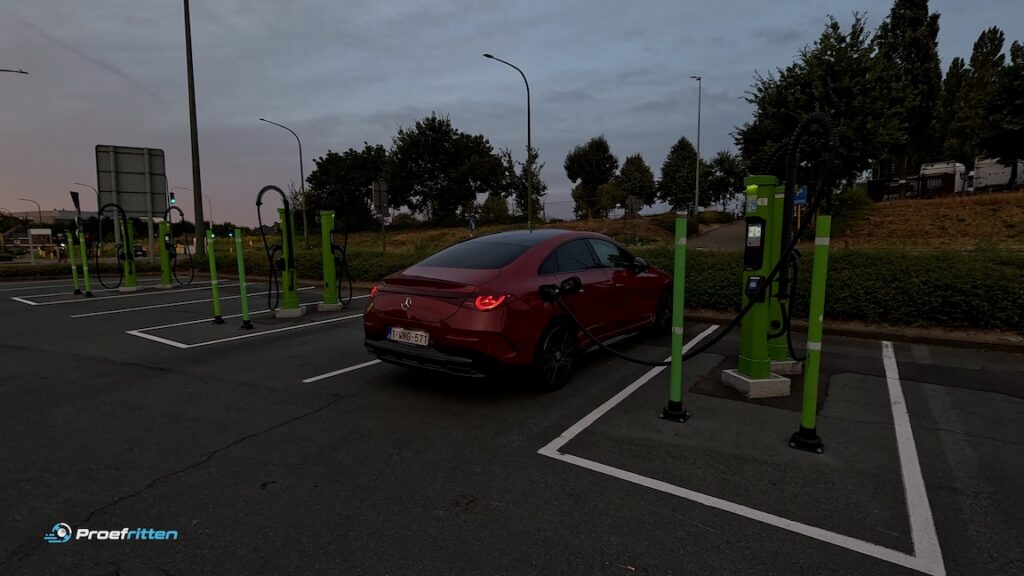
How long does the battery in the Mercedes CLA 350 4MATIC last?
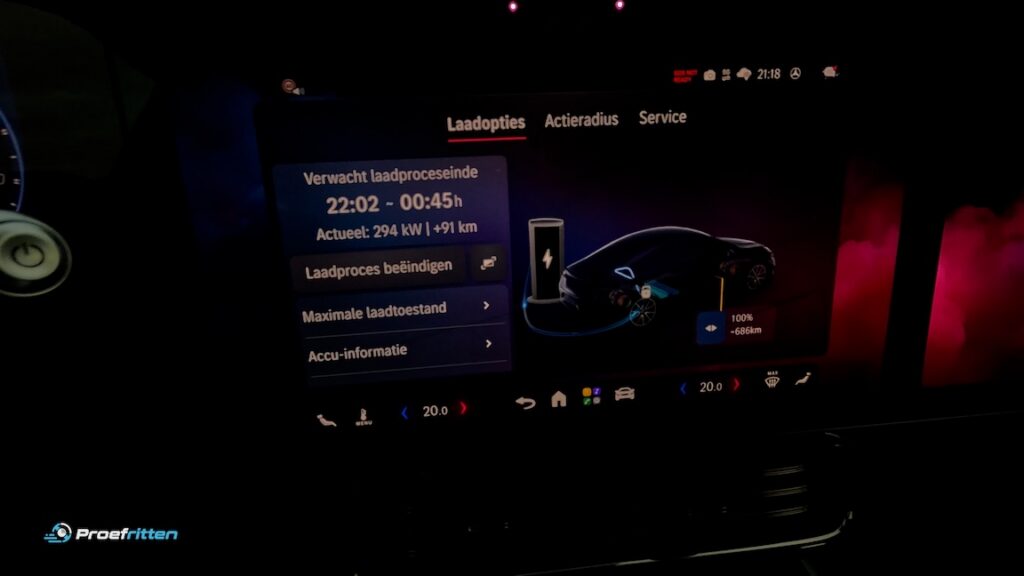
For this test, I’m visiting one of the 85 charging stations operated by DATS 24, the sponsor of this range test. I’ll be conducting a fast-charging test at the DATS 24 charging station in Halle. According to the press kit and Mercedes-benz.be, the CLA 350 can fast-charge at a rate of 320 kW, going from 10% to 80% in 22 minutes. You can also see on the display the current fast-charging rate the CLA is capable of.
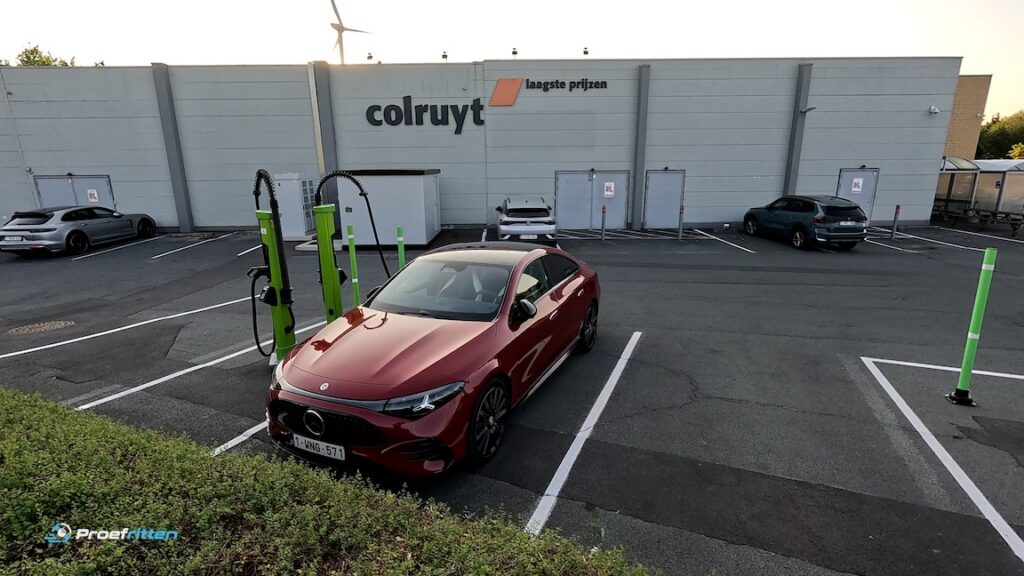
I start charging at 9%. We get 270 kW almost immediately. After 3 minutes, the charging rate is at 294 kW and the battery is at 21%. After 10 minutes, we’re already at 48% and the charging rate has dropped to 157 kW. After 20 minutes, I’m at 72%, and the charging rate is 126 kW. After 25 minutes, I’m at 82%. After 30 minutes, I stop the test at 90%. At that point, I was charging at 74 kW. In total, we went from 9% to 90% in 30 minutes and gained 566 km on the driving range indicator.
Conclusion: What is the range of the Mercedes CLA 350 4MATIC?
In conclusion, I can say that during my test, the range on the highway was between 563 and 625 km at temperatures around 30 degrees. And this was even at higher speeds of 120 km/h to 130 km/h. At lower temperatures, that range will be shorter. For example, in Belgium at the start of my trip, with temperatures around 15 degrees, I had a range of 497 km. When driving in traffic on the highway, that range is considerably lower. For example, while stuck in traffic on the highway near Barcelona, I had a range of 411 km.
On regional roads where you can drive smoothly at constant speeds of 70 km/h to 80 km/h, I achieved a range of 720 km at temperatures ranging from 25 degrees to 30 degrees.
In the fast-charging test, we achieved 566 km in 30 minutes and went from 9% to 90% at 23 degrees. The sweet spot for fast charging seems to be between 18% and 30%. After reaching 50%, the charge level does start to drop more quickly again. I also noticed higher charging speeds at higher temperatures.
Fast charging on the highway in France goes very smoothly. I had a bit of bad luck at my first charging stop, but that’s not typical. There are fast chargers at every rest stop along the highway. The rest stops with restaurants are busier than those without additional amenities. Fast charging in Spain also goes smoothly. One thing to note, though, was that the GPS initially directed me to a fast charger that wasn’t located on the highway. I also saw them along the way at almost every rest stop on the highway, though they were run by more local operators. At my destination in Spain, I also had more than enough options for charging at local stations.

Add your first comment to this post