

What is the minimum range of the Toyota Urban Cruiser 61 kWh?
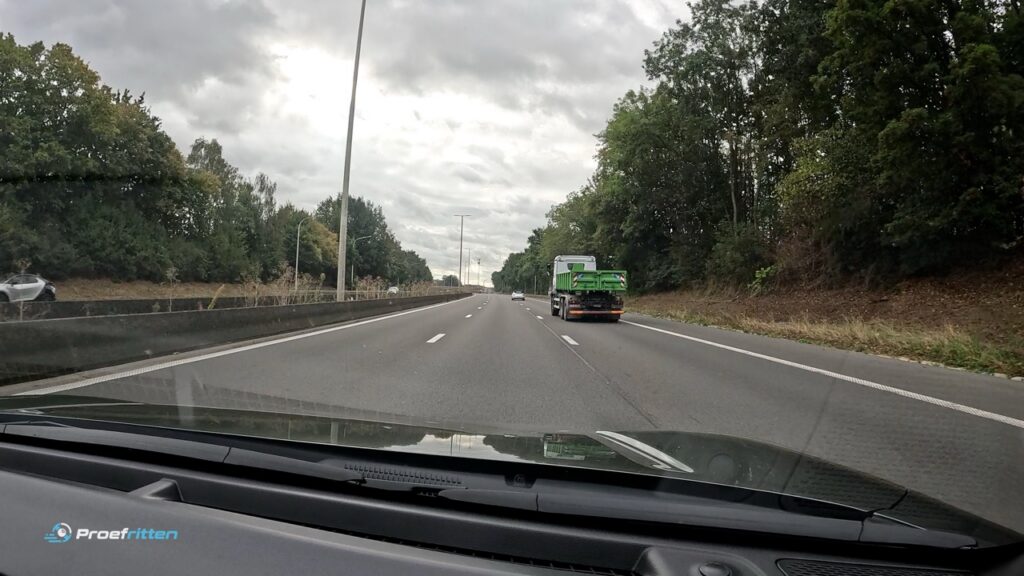
I take the highway toward Namur, heading for the roads in the Ardennes. I drive 120 km/h wherever possible. I slow down a bit now and then because of roadwork, but overall it’s a smooth ride.
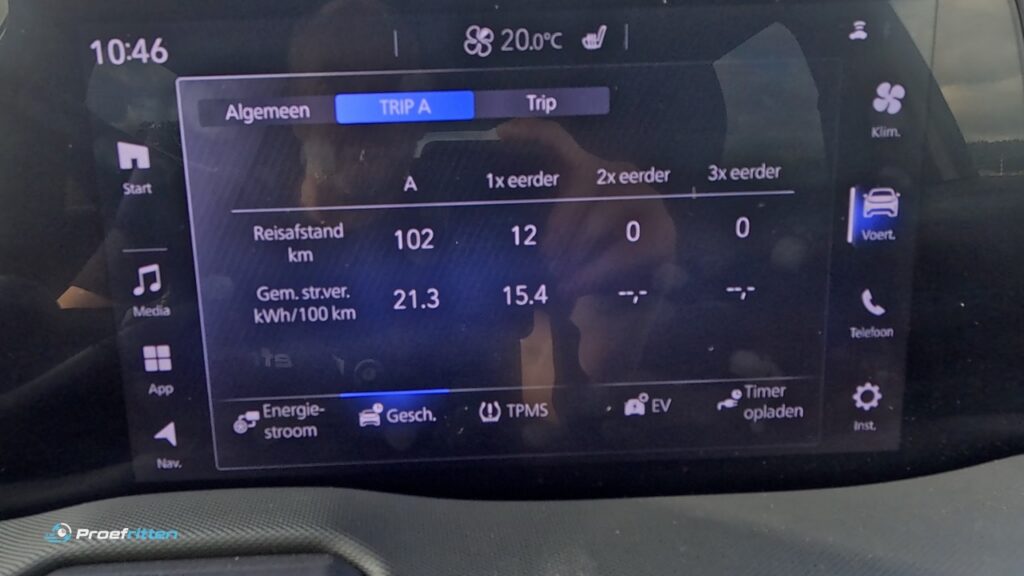
After driving 102 kilometers on the highway, we check the stats again. The energy consumption is 21.3 kWh. As expected, this is significantly higher than in the city and gives an estimated highway range of 282 kilometers. The temperature during the drive was 24 degrees.
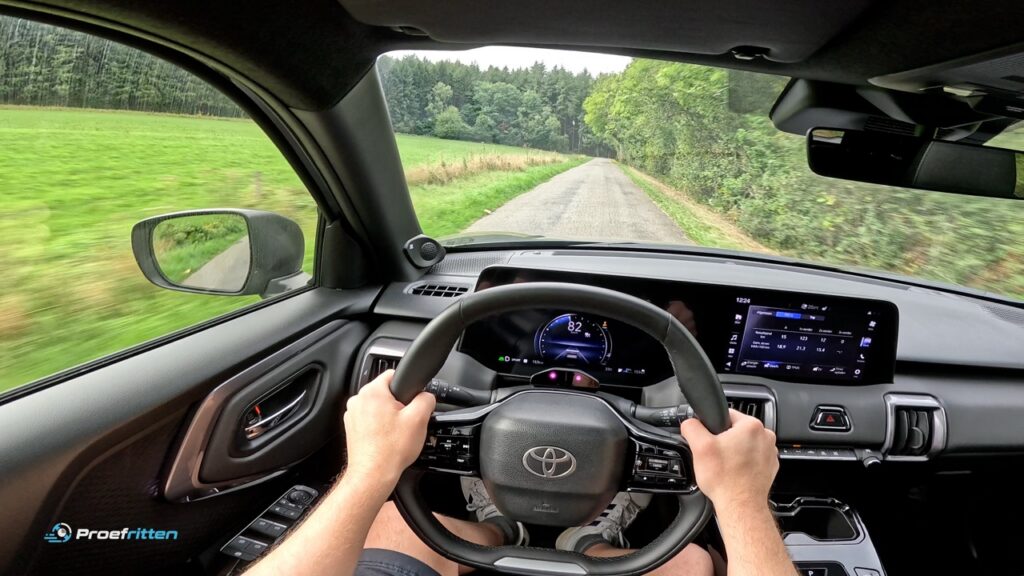
We’re now near Marche-en-Famenne and we’re exiting the highway. We’re driving on country roads now, and I want to see if the car has a sportier side to it. Of course, it doesn’t. With 174 pk on the front wheels, you shouldn’t expect any sporty performance from it. I drove a bit more sportily for a few kilometers, accelerating more often, and then settled back into a relaxed pace.
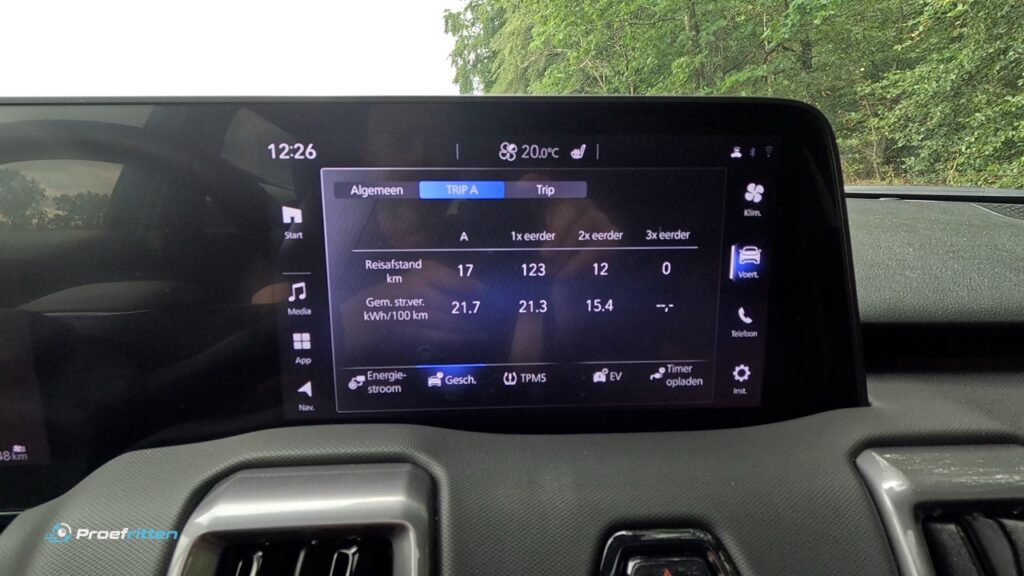
After driving 17 kilometers on these roads at 23 degrees, the average energy consumption is 21.7 kWh. That’s just slightly higher than the consumption on the highway. This brings the “sporty” range to 276 kilometers.
How long does it take to charge the battery of the Toyota Urban Cruiser 61 kWh?
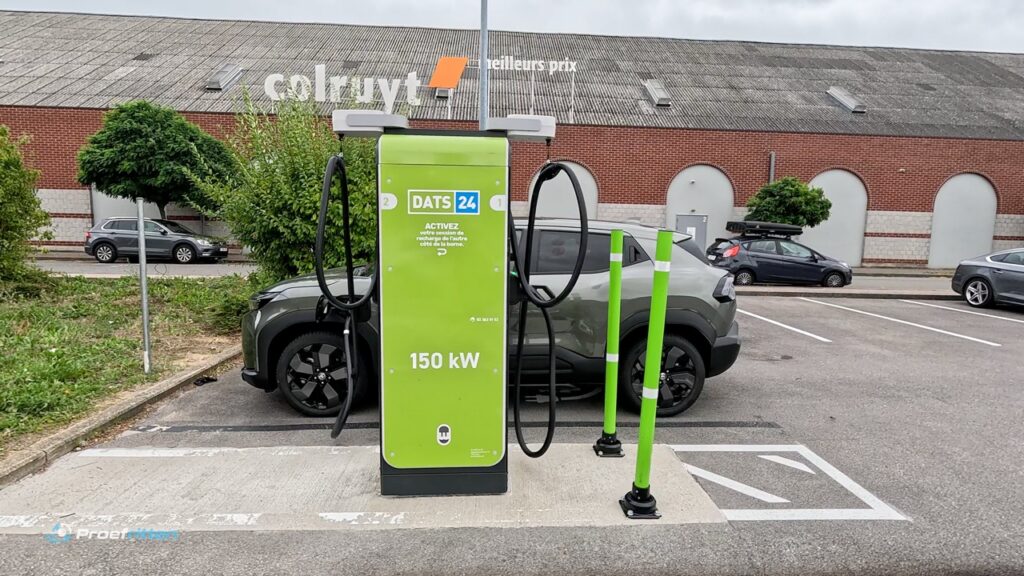
For this test, I’m stopping in Gembloux at one of the 85 charging stations operated by DATS 24, the sponsor of this driving range test. This Urban Cruiser, with a gross battery capacity of 61 kWh, supports DC fast charging at a power output of 67 kW. That’s really quite low these days. Toyota says this EV goes from 10% to 80% in 45 minutes. To put it simply, that’s 15 minutes longer than what you’d typically expect.
We’re conducting the test in mild temperatures of around 23 degrees. At the start of the test, the battery is 12% full and the range indicator reads 43 km. We start charging, and after 30 seconds, we’re charging at a power of 65 kW. After 10 minutes, I check again. We’re still charging at a rate of 65 kW. In 10 minutes, the battery went from 12% to 30%. We’ve already gained a total of 64 km in range.
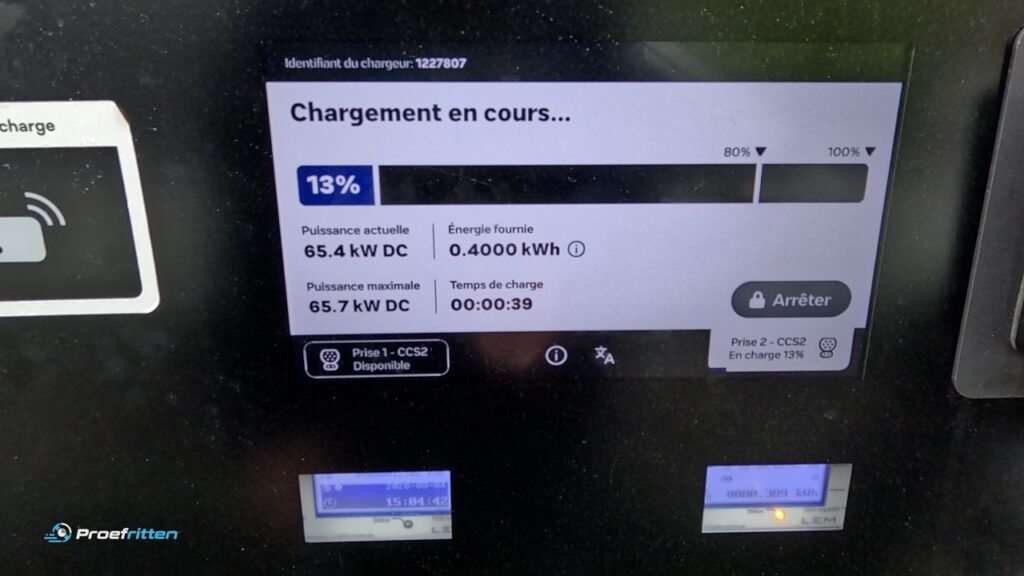
After 20 minutes, the charging rate had increased slightly to 66 kW. The battery went from 30% to 49%. We gained another 65 km of range on the range indicator. After 30 minutes, we stopped the test. At that point, we were still charging at a rate of 52 kW. The battery is at 66%, and the range indicator shows 223 km. So, in 30 minutes, we gained 180 km and went from 12% to 66% at 23 degrees.
Not exactly a great result compared to most electric cars. Is that a problem? Not necessarily. For someone who drives a lot of kilometers every day and often needs to fast-charge, it’s not the best solution. But if you only drive 70 kilometers a day, for example, or if you charge mostly with AC, then it’s no big deal.
What about AC charging? I can tell you that you can charge at 11 kW, and that it takes about 6 hours to go from 0% to 100%.
What is the maximum range of the Toyota Urban Cruiser 61 kWh?
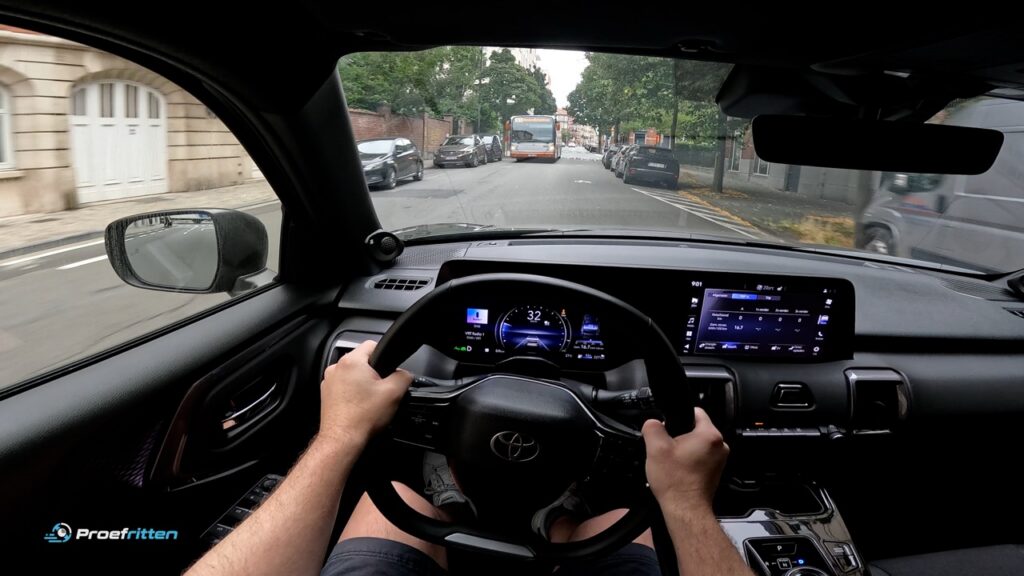
We’re starting the test in Brussels. I filmed this in September; it was about 21 degrees. You can choose from 4 driving modes: Eco, Normal, Sport, and Pedal. You can use Pedal mode to drive with minimal use of the brake pedal. There are three levels, and it works similarly as a regenerative braking system. Energy generated during deceleration is captured and then converted into electricity. I choose the middle setting.
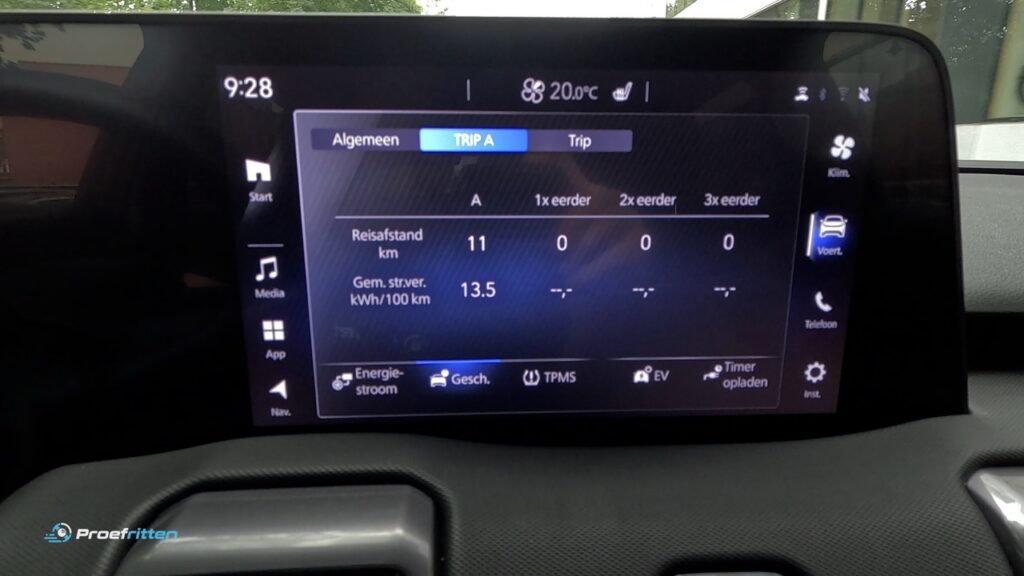
After a short 11-kilometer drive through heavy city traffic, we have our first figure. Energy consumption comes in at 13.5 kWh/100 km. If we calculate the 13.5 kWh consumption based on the net battery capacity of 60 kWh, we arrive at an estimated city range of 444 kilometers. That’s a pleasant surprise. It lives up to its name as an “urban cruiser” and shows that it still achieves very efficient fuel economy even in heavy city traffic. That’s not something to be taken for granted.
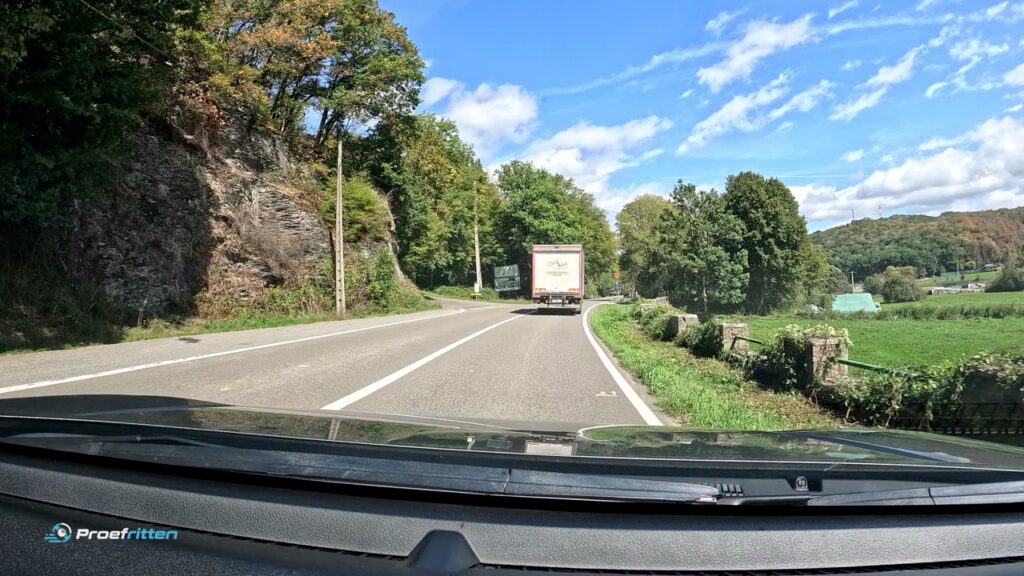
Now I want to figure out the maximum driving range. For this I look for typical regional roads: little traffic, no traffic lights, and just smooth driving at a constant speed of about 70 km/h. These are pretty much the ideal conditions.
I’m curious to see if this will turn out even better than the results in the city.
After driving 50 kilometers under these conditions and at temperatures of 26 degrees, I recorded a consumption of just 12.3 kWh. If you can maintain this level of consumption, you’re looking at a range of 488 kilometers. That’s a more than respectable result.
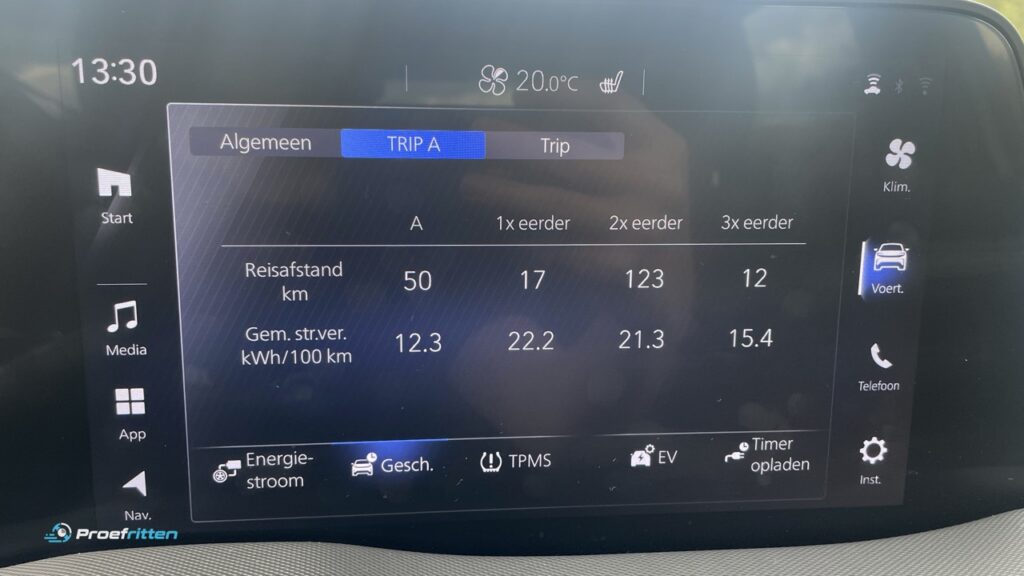
Conclusion: What is the range of the Toyota Urban Cruiser 61 kWh?
In conclusion, I can say that the minimum range on the highway during my test was 282 km at 24 degrees. When driving sportily on country roads, I achieved an even lower range of 276 km.
For maximum range, I managed a solid 488 km on regional roads at 26 degrees. Even in the city, I could count on a decent range of about 444 km.
In practice, for most people it will fall somewhere in between. At colder temperatures, you’ll have a slightly shorter range, and at warmer temperatures possibly just a little bit more. The fast-charging test was somewhat disappointing. We gained 180 km in 30 minutes and went from 12% to 66% at 23 degrees.


Add your first comment to this post