

What is the minimum driving range of the Kia EV4 Hatchback Long Range?
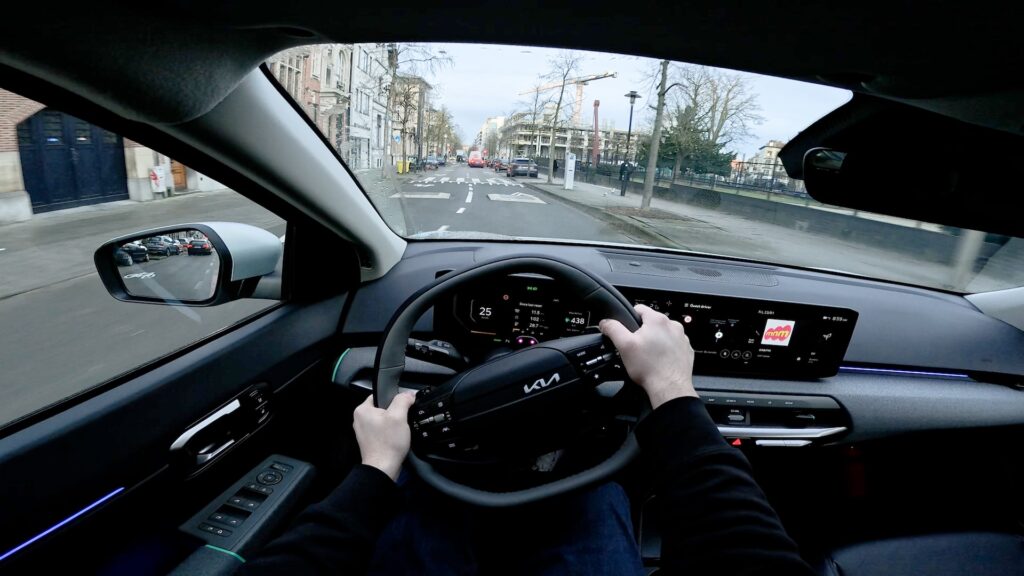
We start the test in Brussels. The first bit of driving was typical city traffic: traffic jams, stopping and accelerating. I did the test in January and the temperature was around 7 degrees. After 20 kilometers of driving, we got a first figure. Consumption clocked in at a solid 25.3 kWh/100 km.
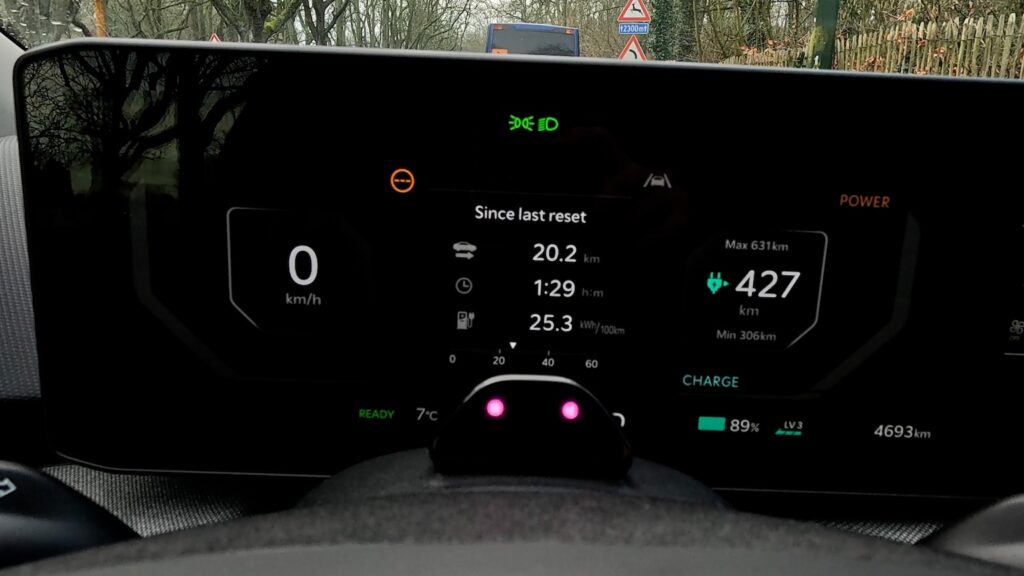
If we calculate a consumption of 25.3 kWh/100 km based on battery capacity, we arrive at an estimated city range of 322 kilometers. You notice that the constant stopping and accelerating, even in an EV, still has an impact on consumption.
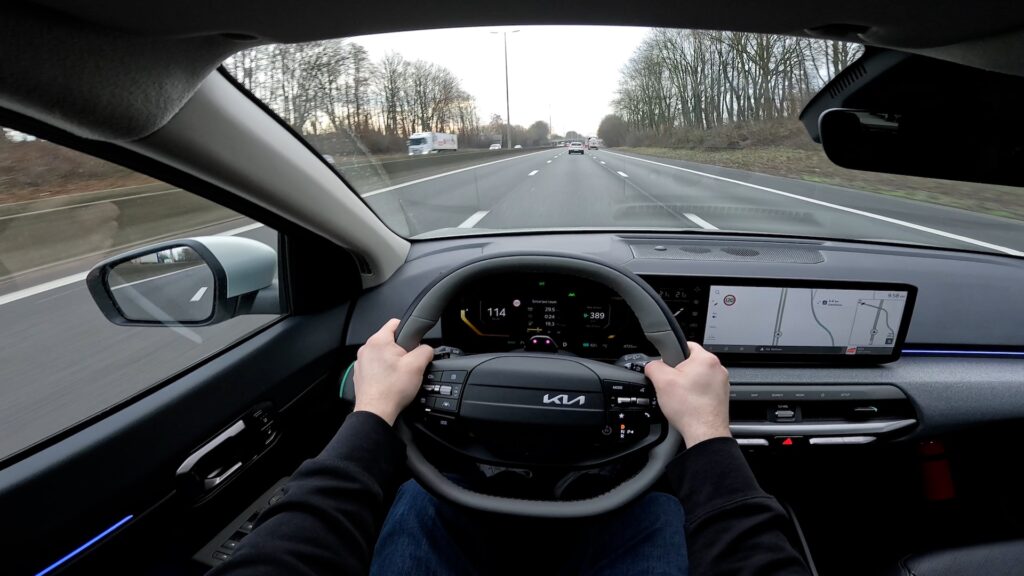
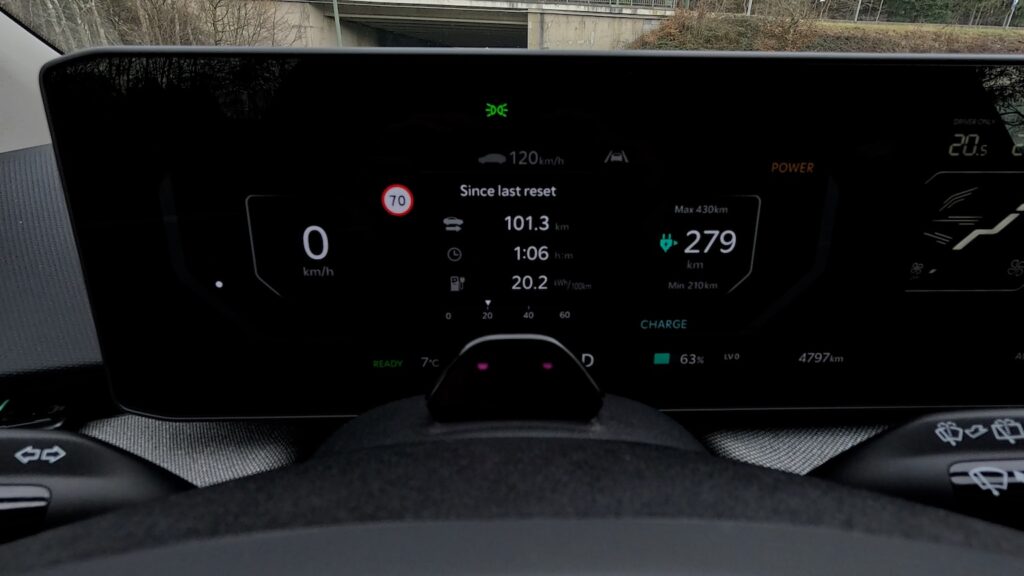
Time to leave the city. We take the highway towards Namur, heading for the Ardennes roads. We drive 120 km/h where we can. Occasionally a little slower due to work, but overall it’s a smooth ride. After 101 kilometers on the highway, we do another check. Consumption is 20.2 kWh/100 km. And that’s interesting. It’s lower than in the city. I didn’t immediately expect that. This gives an estimated highway range of 403 kilometers.
By now we are near Marche-en-Famenne and we leave the highway. We are now driving on country roads, and I want to feel what the car can do. I drove a little more sportily for a few kilometers, accelerating more often, and then drove slowly again.
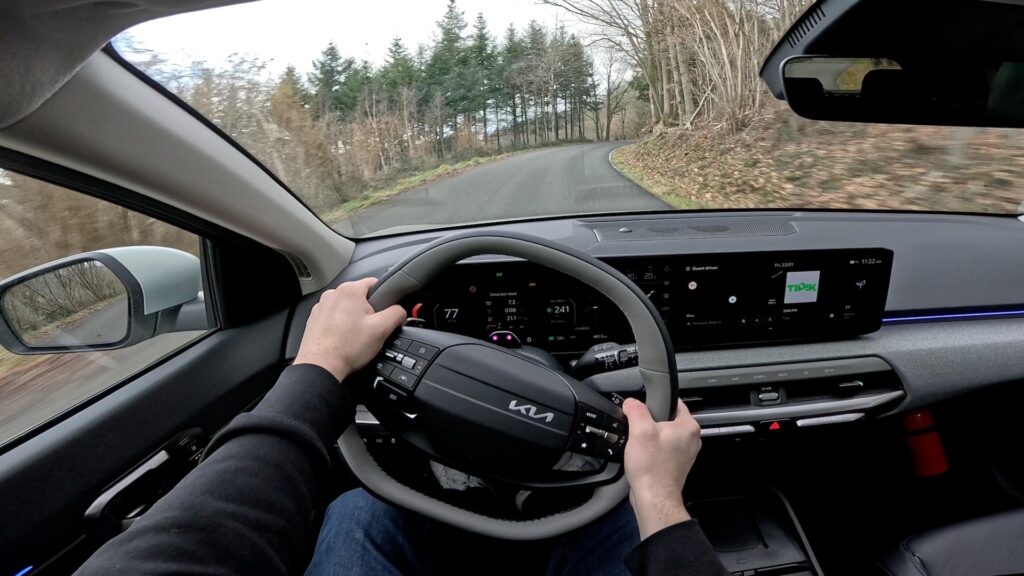
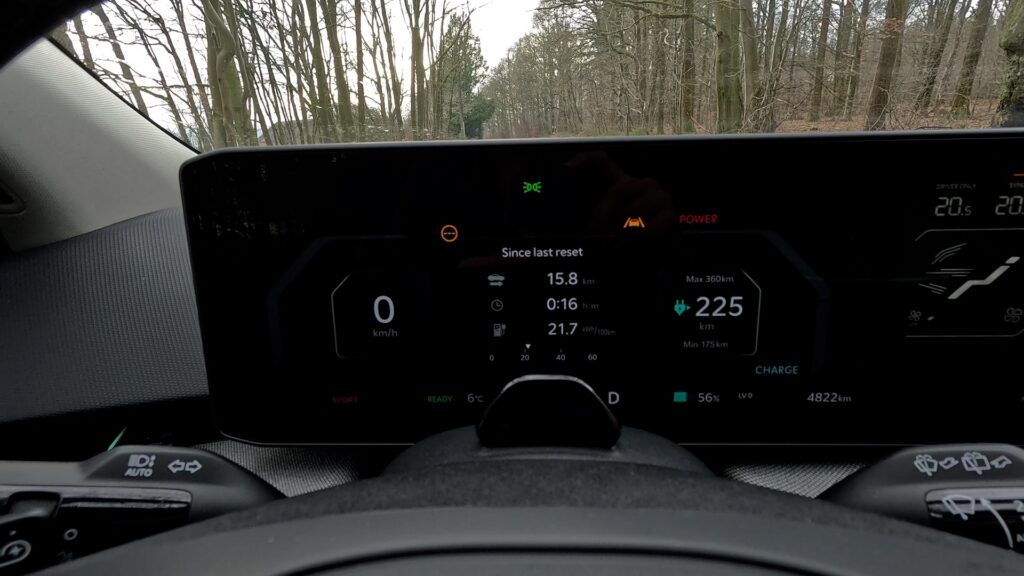
After 15.8 kilometers on these roads, at 6 degrees, the average consumption is 21.7 kWh/100 km. Still, that is again higher than the consumption on the highway. That brings the “sporty” range to 375 kilometers.
How long does it take to charge the battery of the Kia EV4 Hatchback Long Range?
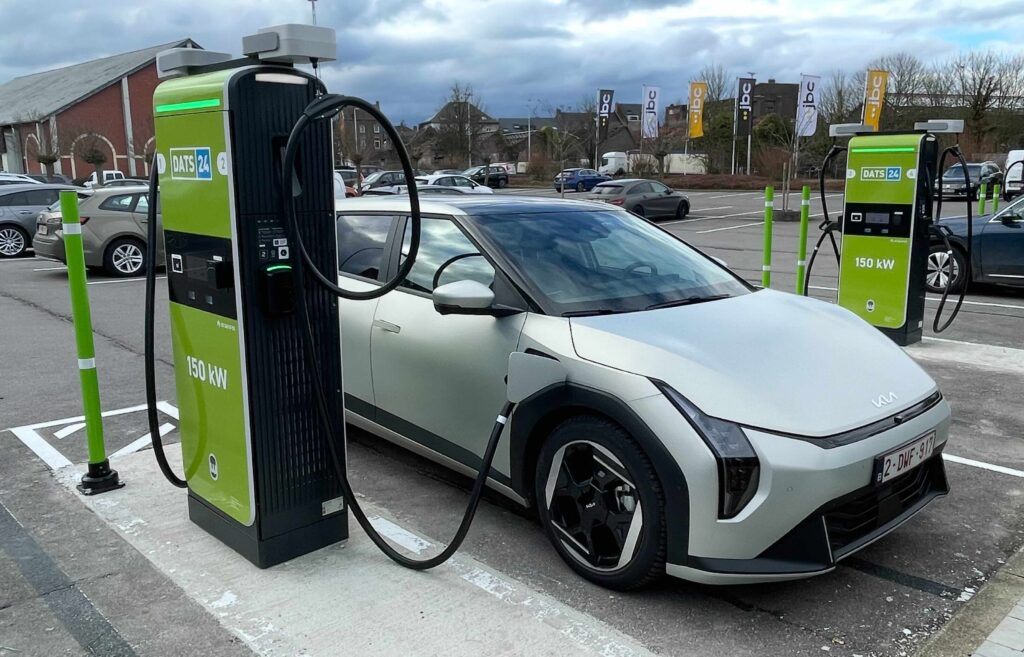
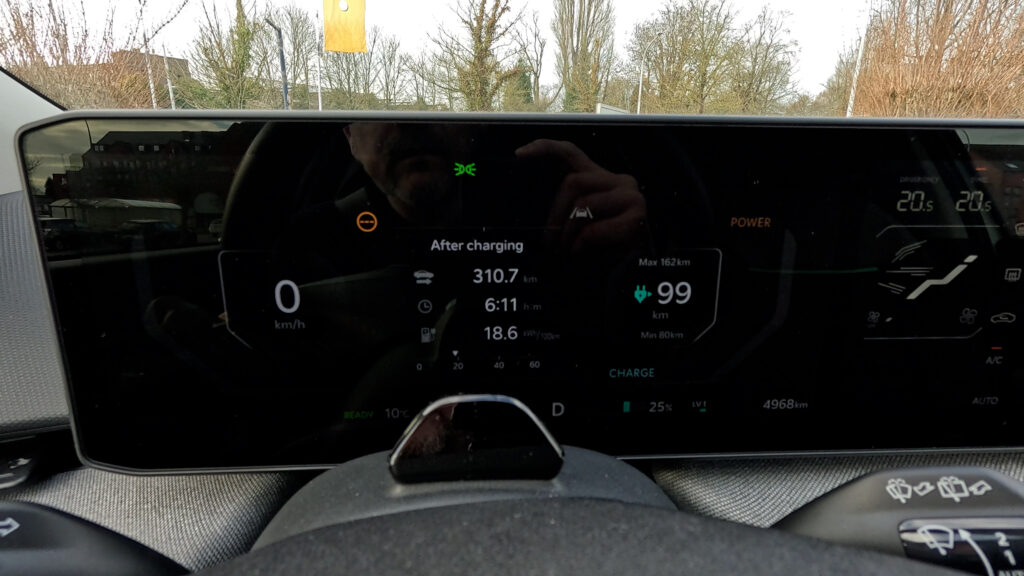
For this test, I visit one of the 60 charging stations of DATS 24, the sponsor of this video. The Kia EV4 hatchback with 81.4 kWh battery can fast charge with a maximum output of 120 kW. Kia says it goes from 10% to 80% in 31 minutes. We do the test at temperatures around 10 degrees. At the start of the test, the battery is 25% full and the range indicator is at 99 km. We start charging and after a minute and a half we charge at a rate of 122 kW.
After 10 minutes, I look again. We are then charging at a rate of 127 kW. We already gained a total of 98 km of range and the battery is now at 47%.
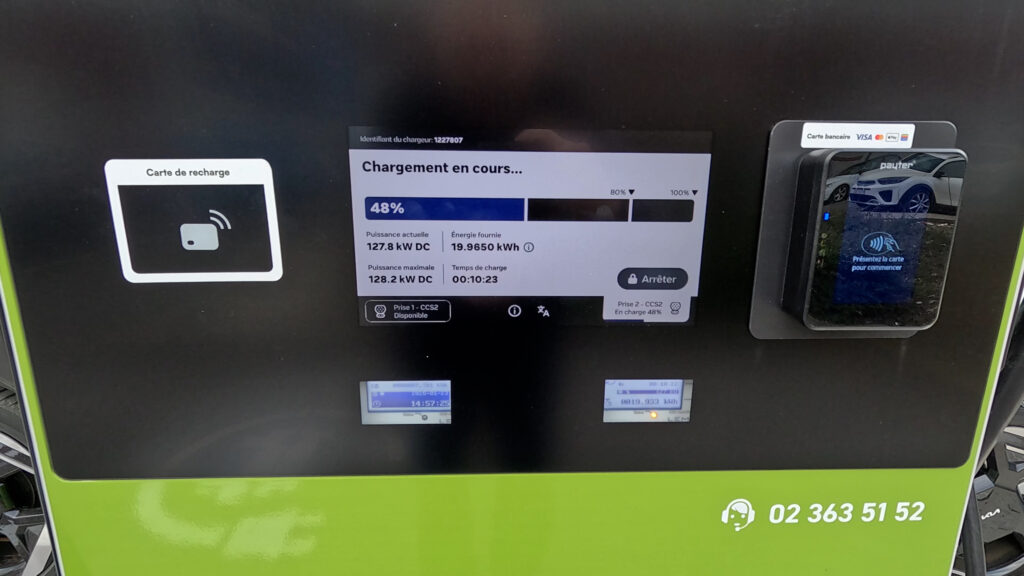
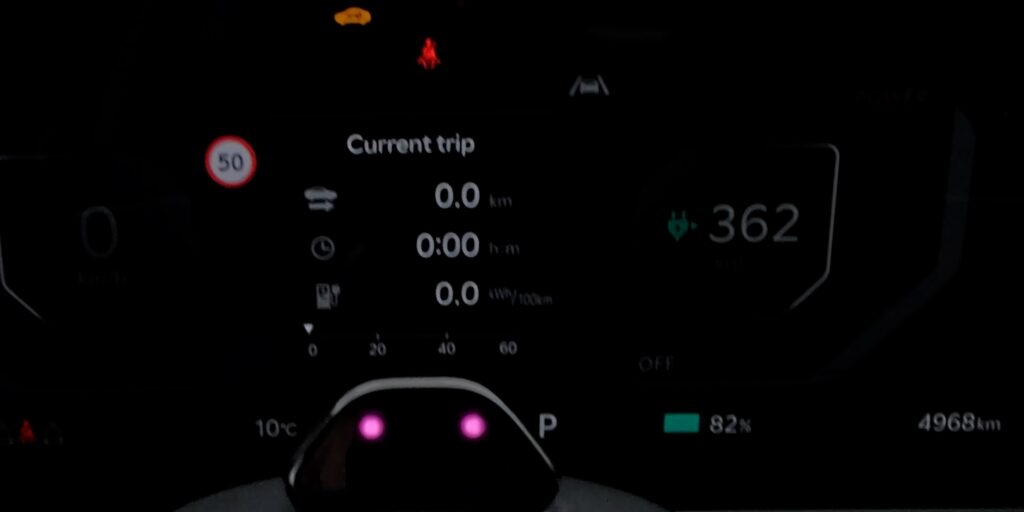
After 20 minutes, I’m still charging at 115.1 kW. That does surprise me that it has such a stable charging curve. Meanwhile, another 113 km of range has been added and the battery is already 70% full. After 30 minutes we stop the test. I saw that we were then only at a speed of 39 kW. The battery is at 82% and we are at 362 km range on the indicator. So at 30 minutes we gained 263 km and went from 25% to 82% at 10 degrees.
I have not done an AC test, but I can pass along that you can AC charge at 11 kW and the charging time to go from 10% to 100% is about 7h15.
What is the maximum driving range of the Kia EV4 Hatchback Long Range?
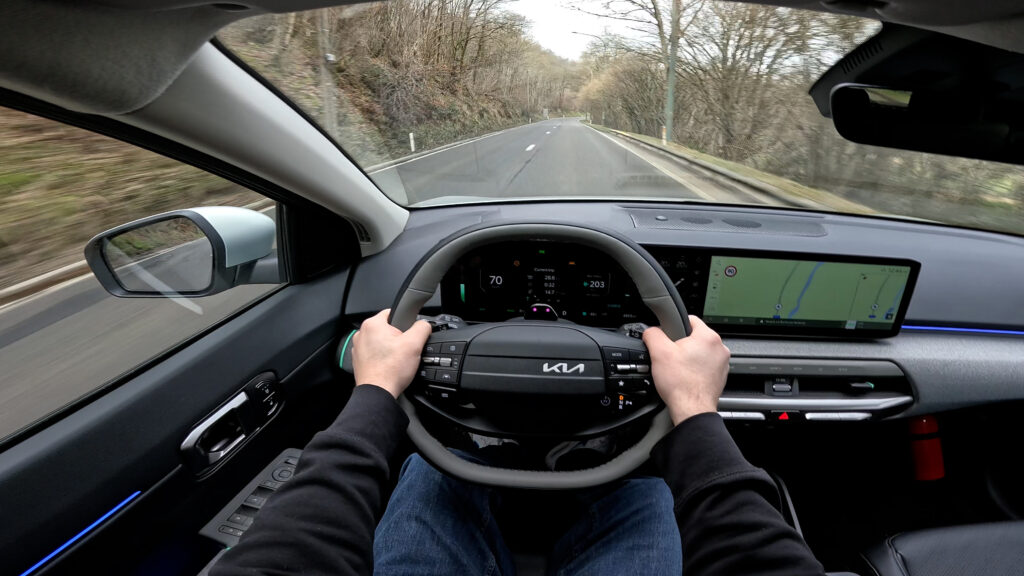
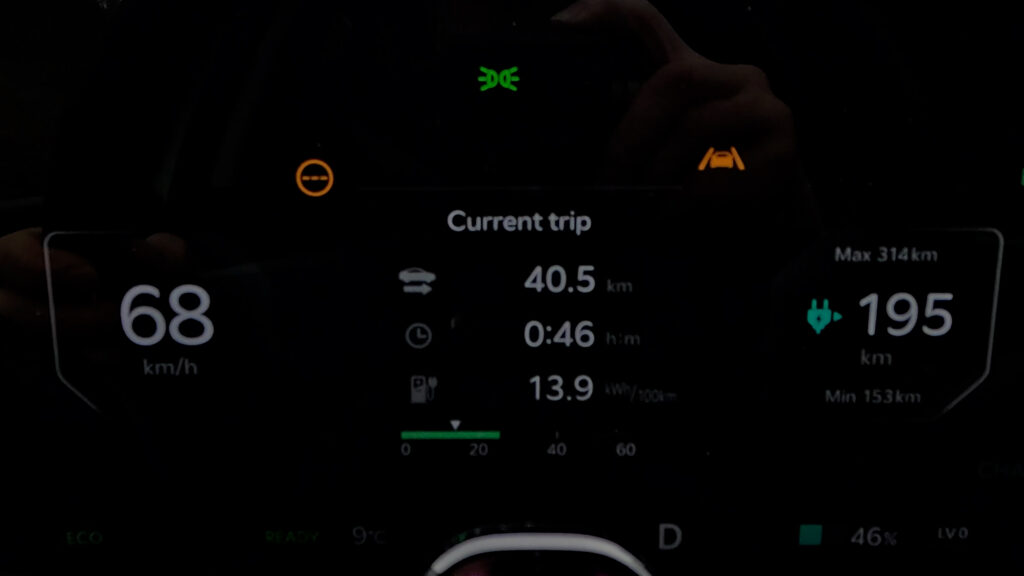
Now I want to figure out the maximum driving range. For this I look for typical regional roads: little traffic, no traffic lights, and just smooth driving at a constant speed of about 70 km/h. These are pretty much ideal conditions. After driving 54 kilometers under these conditions, I read a consumption of 13.9 kWh/100 km. This is a very different figure from previous tests. Of course, it’s a short test of only 54 km. But if you can maintain this consumption, you’re talking about a driving range of 586 kilometers. That’s a huge difference from the 322 km in the city at walking pace. Above all, it shows how much influence your driving style and conditions have.
Conclusion: what is the driving range of the Kia EV4 Hatchback Long Range?
In conclusion, the minimum driving range during my range test was somewhere between 322 km in heavy city traffic to a 403 km on the highway. For the maximum driving range I was at a 586 km in the most ideal conditions on regional roads. This at temperatures of around 6 to 9 degrees. In practice it will be somewhere in between for most. I suspect that in colder temperatures you will have a bit less range, and of course in summer certainly a bit more. In the quick charge test, I noticed that the charge rate was slightly higher than specified and that that charging curve remains fairly stable while charging. At 30 minutes, we went from 25% to 82% that way. Some cars have a higher peak charge rate, but you sometimes only get that for a very short time. Although this Kia does not have a high charging rate on paper, it keeps charging at that speed for a long time. As a result, the final charging result is very good.
Add your first comment to this post


Add your first comment to this post